

.png)
When Disaster Strikes: President Xi’s Crisis Response and the True Mark of Leadership
When Disaster Strikes: What Xi’s Response to Bhote Koshi Reveals About Crisis Leadership


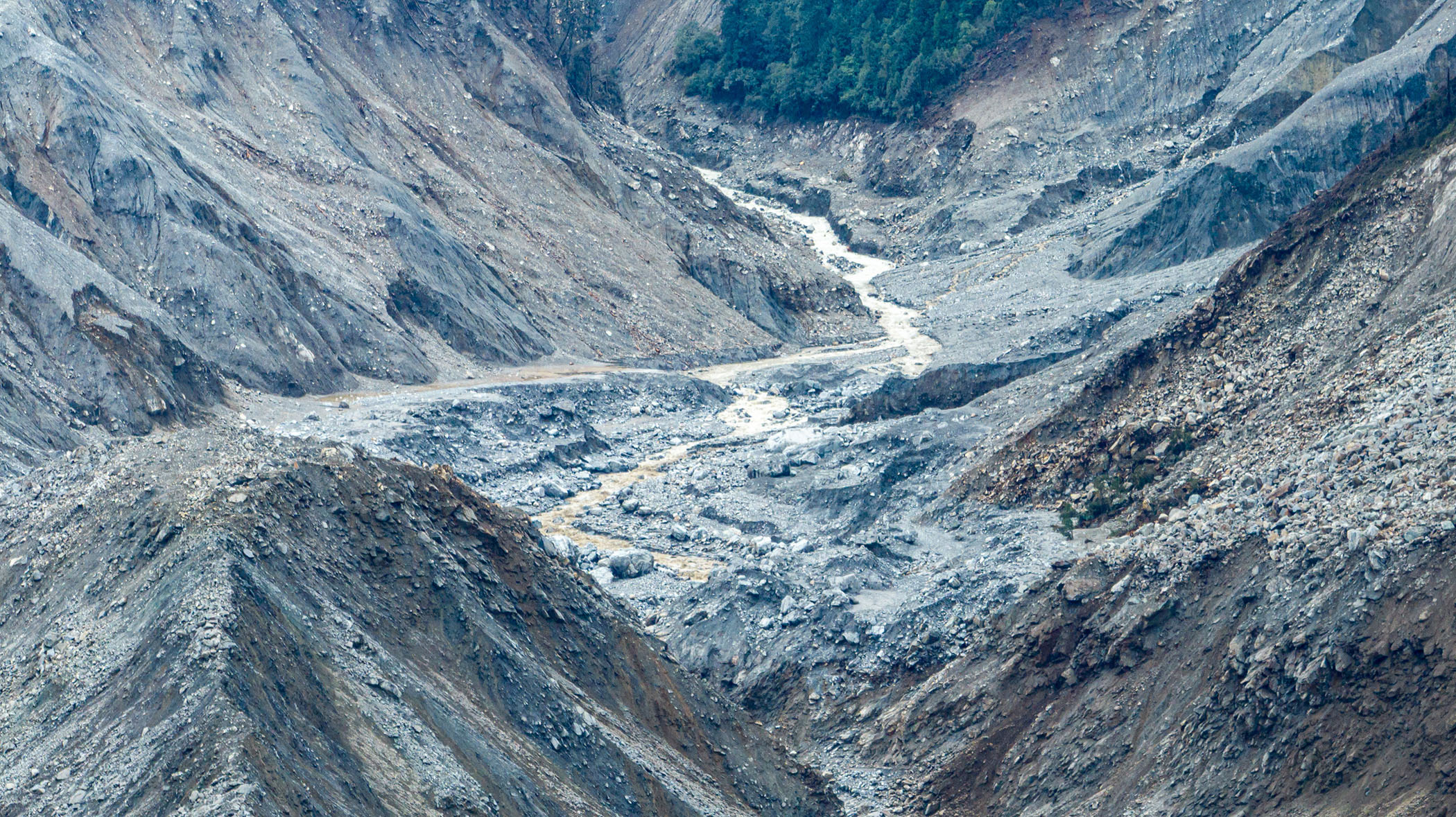
Kathmandu: The floods and landslides that struck the Nepal–China border region last Wednesday affected both countries. On the Nepali side, the Bhote Koshi and Trishuli river systems suffered extensive damage, while on the Chinese side, floods and landslides affected the border area and infrastructure in Gyirong County of the Tibet Autonomous Region.
Following the disaster, both countries have prioritized search and rescue operations. In Nepal, security agencies and various state mechanisms have been mobilized for rescue and relief efforts. In China, authorities ranging from local administrations to the central government have also been actively involved in rescue and relief operations.
China’s response to the disaster has attracted considerable attention from international media. In particular, Chinese and international media have closely reported on President Xi Jinping’s instructions following the disaster, the coordination led by Premier Li Qiang, and the deployment of senior officials to the affected area. Rather than viewing these developments solely through the lens of China’s political system, they can also be examined from the perspective of how a country’s highest political leadership mobilizes state mechanisms during a crisis.
Immediate Instructions Following the Disaster
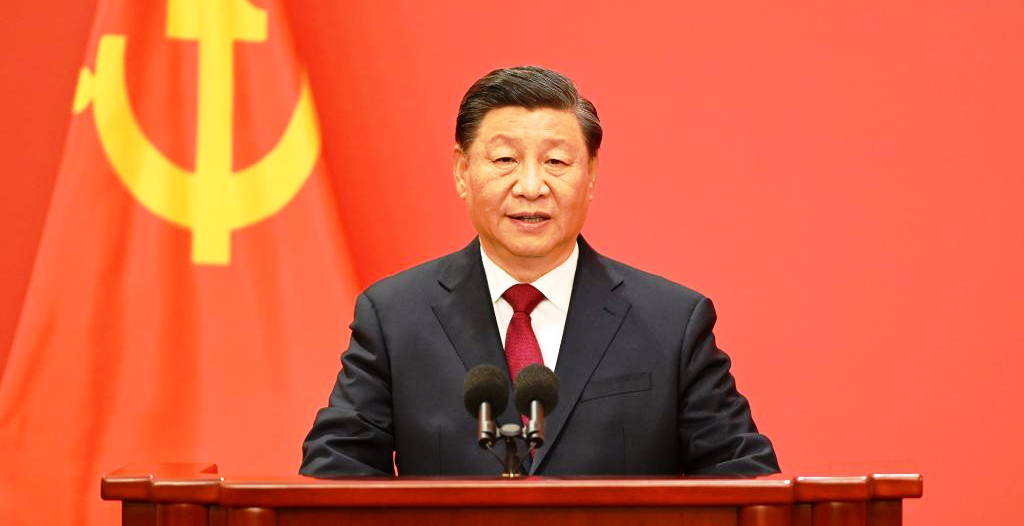
According to China’s state-run Xinhua News Agency, after receiving information about the floods and landslides, President Xi instructed authorities to prioritize search and rescue, evacuate affected people to safety, and take measures to prevent further damage.
Immediately after the disaster, the Central Committee of the Communist Party of China placed the incident among its highest priorities. President Xi issued important instructions on rescue and emergency response operations.
Following Xi’s instructions, Premier Li Qiang, a member of the Politburo Standing Committee of the Communist Party of China, traveled to the affected area. He met affected residents and personnel involved in rescue and relief operations and conducted an on-site inspection of the emergency response and rescue efforts.
Similarly, Zhang Guoqing, a member of the Politburo and Vice Premier of China, also visited the disaster zone and provided guidance on rescue and disaster management operations.
Xi emphasized the treatment of the injured, the search for missing people, and the management of affected residents. He also instructed authorities to collect accurate information about the disaster and continuously assess emerging risks.
Premier Li Qiang likewise directed relevant agencies to accelerate rescue and relief operations. The Ministry of Foreign Affairs was also instructed to remain active in international coordination.
Xi Convened an Emergency Communist Party Meeting
Soon afterward, on Friday, Chinese President Xi Jinping chaired a high-level meeting to discuss the devastating floods and landslides along the Nepal–Tibet border.
According to Chinese state media CGTN, the situation resulting from Wednesday’s floods and landslides in the Gyirong area was a key agenda item at the meeting of the Communist Party of China’s high-level leadership.
At the beginning of the meeting of the Politburo of the CPC Central Committee, President Xi—who also serves as chairman of the Central Military Commission—and other Standing Committee members, including Li Qiang, Zhao Leji, Wang Huning, Cai Qi, Ding Xuexiang and Li Xi, observed a minute of silence in tribute to those who lost their lives in the disaster.
President Xi reviewed the damage caused by the disaster and instructed relevant Party and government agencies to take necessary measures for search and rescue, relief, and the management of affected areas.
The meeting noted that the disaster had occurred in an extremely cold high-altitude region characterized by steep valleys, rapidly changing weather, numerous glaciers and glacial lakes, and potential geological hazards. Such geographical and weather conditions create significant challenges for emergency rescue operations.
The meeting instructed all agencies and departments involved in rescue operations to adopt firm and effective measures. It emphasized the need to prepare search-and-rescue plans scientifically and make every possible effort to locate and rescue all missing Chinese and foreign nationals.
Xi’s Second Focus: The Barrier Lake
Another risk emerged in the Gyirong area following the floods. A landslide blocked the river’s flow, creating a temporary lake. Such a lake is generally known as a barrier lake. As water accumulates, the natural barrier can become unstable, creating the possibility of a sudden release of water.
China appears to have treated this risk as an important monitoring priority alongside the initial rescue operation.
At Friday’s high-level meeting of the Communist Party of China, Xi instructed authorities to closely monitor the landslide-created lake and the stability of surrounding mountains.
According to Xinhua, he called for effective measures to prevent further disasters.
The timing of this instruction is significant. While the initial rescue operation was still underway, the possibility of another disaster was incorporated into the highest level of the decision-making process.
According to international news agency Reuters, Chinese rescue teams temporarily halted operations after water levels in the barrier lake rose. Following aerial inspections and risk assessments, rescue operations resumed once the situation was considered relatively safe.
This highlights another important principle of disaster management: the speed of rescue is important, but assessing risks that may emerge during rescue operations is equally essential.
Senior Officials at the Disaster Site
Whether a head of state personally visits a disaster site should not, by itself, be the sole measure of crisis leadership.
In China’s case, President Xi issued strategic directions from Beijing, while the Premier and Vice Premier assumed responsibility for administrative and on-site coordination.
Under such a structure, the primary role of the head of state is to establish strategic priorities and mobilize different state institutions toward a common objective. In China, such directives move through the centralized Party and government structure to local administrations. This enables instructions from the highest political leadership to be translated into administrative action relatively quickly.
However, China’s approach cannot be separated from its unique political structure. Nepal has a fundamentally different federal democratic system, and China’s administrative model cannot simply be replicated in Nepal.
Nevertheless, clear command, clearly defined responsibilities, and a mechanism capable of immediately implementing decisions are important principles for any political system when responding to disasters.
Use of Technology in Rescue Operations
International reports have also highlighted the importance China placed on technical assessment during rescue operations in Gyirong.
Aerial surveys and three-dimensional modeling were reportedly used to assess the condition of the barrier lake. These tools helped authorities evaluate water levels and potential risks.
Chinese state media have also reported the use of drones and other technological equipment by rescue agencies.
This demonstrates the growing role of technology in modern disaster management. Particularly in mountainous regions—where roads may be inaccessible, terrain can remain unstable, and direct inspection can be extremely difficult for rescue teams—drones, satellite imagery, aerial surveys, and digital modeling can provide critical information.
Nepal faces similar risks in its Himalayan terrain. The Bhote Koshi disaster has therefore once again highlighted the need for technology-driven early-warning systems, risk assessment, aerial surveillance, and scientific disaster preparedness in Nepal.
More importantly, the disaster raises a broader question for Nepal: when a crisis strikes, how quickly can political leadership establish priorities, mobilize the state machinery, assess emerging risks, and ensure that decisions are translated into action on the ground?
That may be the most important lesson to draw from the response across the border.


2026-08-30-20-38-36.jfif)
2026-08-27-18-44-46.jpg)